Saturday, September 28, 2013

FREEBIE! Daily 5 Posters

On a recent school improvement day, I was working with a group of kindergarten teachers on centers.  I suggested using the Daily 5 for the ELA centers.  We created a number of centers for each element of the Daily 5.  All of the centers aligned beautifully with the Common Core Standards for kindergarten.  

I loved the I Spy Bags, the Sand Writing and the Chicka Chicka Boom Boom 
story mat at mrsriccakindergarten.blogspot.com  

I also fell in love with the amazing Retelling Prop ideas at 
www.kindergartenworks.com/filing-cabinet/never-ending-story/

FREEBIE! I created Daily 5 Posters in Spanish or English using clipart 
from Scrappin Doodles.
Click on the version you want - Spanish or English.

Daily 5 Posters in Spanish or English

Friday, July 5, 2013

FREEBIE Daily Planner!

             How do you like this Daily Planner?   
     This Daily Planner is FREE to anyone who becomes a follower!

I decided to design my own planner for the upcoming school year 2013-14 from August to July.  On the left is a NOTES page and on the right is the CALENDAR for the month.  If you'd like your own copy, become a follower by email and I will customize the cover with your name and email it to you.  

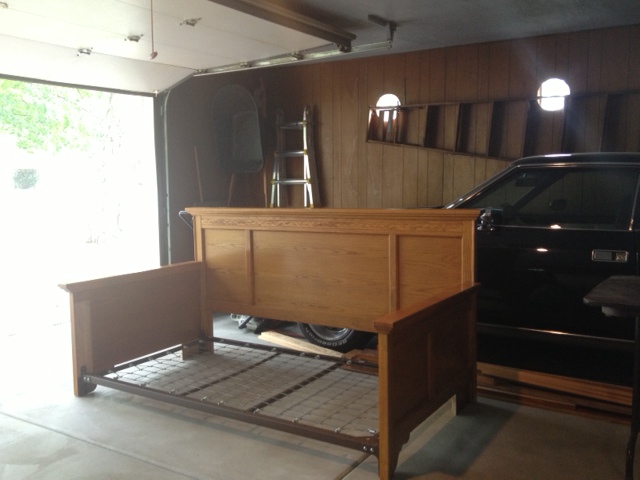
Take a look at the daybed we made out of a king-size headboard and footboard.  You would think I have nothing else to do!

Monday, May 27, 2013

Strengthening Bridges Between Languages

I recently facilitated a School Improvement Day for a friend that’s a principal of a K-6 building with gen ed, dual language and gifted classes.  I presented on the CCSS shifts for ELA.  When we were planning for the SIP day, my friend suggested that I use some of the research from Karen Beeman and Cheryl Urow’s book titled, Teaching for Biliteracy Strengthening Bridges between Languages.  Of course I needed another book!  This is a very comprehensive and practical guide with strategies for building bridges to biliteracy and the bridge from theory to practice.  This would be an excellent text to read and discuss because of the diversity in our classrooms. 
In my research I found this                                  
amazing site of the week!


The mentor mob from the UK listed the 12 rules for Spanish cognates along with examples.   Spanish cognates are words from two languages that are the same or similar. What intrigued me was this quote, “As English borrows many words from Latin there are many Spanish-English cognates. By learning a few set rules you will have an instant Spanish vocabulary of thousands of words.”  I just created a powerpoint using their material.  This presentation includes each of the rules by themselves followed by the second slide that includes the rule and the examples that I found on the Mentor Mob’s site.  I thought the ‘rule’ slides could be posted and the powerpoint could be used for instruction. It would make a great ongoing activity for students to add new words that they find onto the charts.  You can get the Spanish Cognate powerpoint here.  

Friday, May 3, 2013

QAR for the Primary Grades


We all know that the easiest way to increase student achievement is to improve instruction and questioning is the most powerful tool in our teaching repertoire.  The CCSS rely heavily on text-based evidence and higher-level thinking.  Questioning really builds the bridge between literal and inferential understanding and content knowledge.  

Recently, I read something about questioning that is based on Costa' work:
Well-structured questions include three parts: an invitation to think, a cognitive process and a specific topic.  “The order of the three parts may vary, but all three are necessary to formulate an effective question to promote thinking.”  This strategy is based on the work of Costa and the “Three Story Intellect.”  It is a very simple yet profound strategy for questioning.  How simple is that!

1. an invitation to think       "Penny, 
2. a cognitive process         can you explain in your own words
3. a specific topic               how you solved this problem?"

Here's a photo of a product I just posted on Teachers Pay Teachers on QAR for the Primary Grades.  
Right There Questions are in your hand questions - Students look closely with a magnifying glass for Think and Search Questions - Author and Me require thinking and On My Own come from the heart 


Sunday, April 14, 2013

I've Got a Deal for You!

Are you as busy as I am working on curriculum 
or aligning your lessons with the CCSS?
I have a deal for you!
Become a follower by email
and I will send you one grade level checklist
of Common Core State Standards
for both English Language Arts and Mathematics.
This checklist is editable.  

Pass the Word,
Penny

Wednesday, April 10, 2013

Jump Start Thinking in Your Classroom


I've been reading two books simultaneously!   The first is Teaching Students to Read Like Detectives, by Fisher, Frey and Lapp and the second is Making Thinking Visible: How to Promote Engagement, Understanding and Dependence for All Learners by Ritchhart, Church and Morrison.  They are my new favorites because they embody the essence of Common Core Standards and what our students can achieve. 

I love the idea of giving kids and teachers the tools/structures to meet the expectations of the CCSS.  I have attached a free foldable I adapted from a Thinking Visible routine called, Compass Points.  It's a popular routine that helps students explore various facets of a proposition or idea.  Ask students these questions and record their responses in the directions of a compass to provide a visual anchor.  More information can be found at www.pz.harvard.edu.
Compass Points (Free Foldable)
I envision strategically choosing a few of these thinking routines at a time to model in classrooms and share with teachers before the end of the year.  

Friday, April 5, 2013

Getting to the Core: Argument Writing


Argument writing is a key area of focus in the CCSS.  The CCSS routinely expects students to draw evidence from texts to produce clear and coherent writing that informs, explains, or makes an argument in various written forms (notes, summaries, short responses or formal essays).  I have created a foldable on TPT that is a great tool for instruction in the writing of a CEI paragraph: Claim, Evidence, Interpretation.  It's also a great follow-up tool for student's to practice the skill of argumentation.  When you make copies of the foldable, copy the foldable pattern on the front and lined paper on the back.  I have the students cut one “door” at a time.  After students complete their response under each door, they just need to open all the doors to see a completed Claim, Evidence, Interpretation paragraph.