

Monday, August 21, 2017

Monday, July 17, 2017
Managing and Organizing Your Words Their Way Classroom!
The question is, "How do I manage and organize a program that is based on the individual spelling developmental levels of my students?"
Words Their Way: Word Study for Phonics, Vocabulary and Spelling Instruction from Pearson Education is a hands-on approach to word study and teaches students to look closely at words to discover spelling patterns, syllable structures, and spelling-meaning connections needed for reading and writing. The heart of the program is the sort and the process of grouping words or pictures that represent sounds into specific categories.
Tip #1: Color-Code Everything!

My Managing and Organizing Words Their Way product on Teachers Pay Teachers includes all of the background knowledge that you need plus sort posters, group posters, basket tags, and word study notebook templates.
Tip #2: Review the Program Assessments and Progress Monitoring

Review your grade level Spelling Inventory, the Spell Checks and the Qualitative Checklists. Familiarize yourself with the individual spelling features to assist you during observations.
Tip #3: Organize for Success

There are five developmental spelling stages. First make a master copy of all the sorts for each of the 5 spelling stages and store them in sheet protectors in a large binder. Next, before starting the program but after administering the first student inventory, determine which spelling stages you will be focusing on throughout the school year. For instance, by grade 3 most of your students will not need Alphabetic Letter Name. Then, designate one color of file folder for each stage you will be utilizing in your class. Print a class set of each sort for every stage you will be utilizing and label each folder. For example, WWP16 means Within Word Patterns, Sort 16.
Tip #4: Create a Words Their Way Weekly Routine

Every teacher needs to set up a 5-day weekly routine that always includes sorting, writing and reading the weekly words in context.
Tip #5: Empower student ownership of the program and their spelling development with Student Word Study Notebooks

Students store their weekly word sorts along with with their Word Study Notebook in their Word Study Folder. The Word Study Notebook spiral records students' sorts, and weekly reading and writing assignments.
Friday, April 7, 2017
Depth of Knowledge DOK Resources
Everyone is talking about RIGOR. The Common Core Standards call for a more rigorous curriculum, instructon and assessment. Rigor is the kind and level of thinking required of students to successfully engage with and solve a task. Rigor is not about difficulty, it's about complexity of understanding.
What does rigor look like in a classroom? Two widely accepted measures of cognitive rigor are Bloom's Taxonomy and Webb's Depth of Knowledge Levels. Bloom's Taxonomy focuses on the verbs and indicate the level of performance or the level of higher-level questions. Depth of Knowledge focuses of complexity of content standards to successfully complete an assessment or a task. When you unpack the standards, first look at the verb and align it with Bloom's levels for the level of performance. Then look beyond the verb to determine the level of understanding required to meet the standard.
Karen Hess created a Cognitive Rigor Matrix that integrates Bloom's Taxonomy with Webb's Depth of Knowledge for analyzing teacher lesson planning and assessments. In my district, we have been "mapping" out the learning events in our UbD units to ensure a balance of lessons and assessments across all levels from simple to complex. Teachers are seeing that they can "tweak" some of their lessons and assessments to make them more rigorous. For example,
DOK 1 Describe three characteristics of metamorphic rocks.
DOK 2 Describe the difference between metamorphic and igneous rocks.
DOK 3 Describe a model you might use to represent the relationships that exist in the rock cycle
All three tasks begin with the word describe but each task is at a different depth of knowledge. Check out what comes after the verb! What comes after the verb is more important than the verb itself.
I have updated my DOK posters product on TPT. The Depth of Knowledge Resources now include:


Specially Priced at $2 for a limited time.
Please check them out at www.teacherspayteachers.com/Store/Penny-Lund
Wednesday, January 11, 2017
Increase Cognitive Rigor in Your Classroom!
I
have just revised and reposted my product, Increase Cognitive Rigor in Your
Classroom to TPT. My BLOOM’s and Depth
of Knowledge posters and accompanying double-sided bookmark provide a quick
reference for teacher lesson planning and for student questioning and choice of tasks. I have also included a Bonus Product: Students with BLOOM with Higher-Level Questioning described in the previous post.


This
product includes:
BLOOM’s
Taxonomy Posters
WEBB’s
Depth of Knowledge Posters
Bookmark
with the BLOOM’s Taxonomy Posters on front and WEBB’s Depth of Knowledge
Posters on back.
Bonus:
My BLOOM with Questioning Product
This
product is based on the research of Anderson and Krathwohl’s Revised Bloom’s Taxonomy, Webb’s Depth of Knowledge and the Cognitive Rigor Matrix of Karin Hess,
Dennis Carlock, Ben Jones and John R. Walkup.
Check these out at www.teacherspayteachers.com/Store/Penny-Lund
if you think you can use this product in your classroom.
Statements
to remember when planning future lessons that are rigorous:
Plan
with Blooms but assess with DOK (Depth of Knowledge.
Determine
which CCSS your lessons meet but also evaluate where each lesson falls within the
four levels of the Depth of Knowledge.
When
you can, plan tasks at the DOK 3 Level because DOK 3 incorporates DOK
Levels 1
and 2. The same goes for question. Quickly ask questions at Levels 1 and 2
and
move quickly into questions at Levels 3 and 4.
Plan
your progression of lessons throughout a unit or topic across all four DOK
levels and always reference your lessons with the Big Ideas and the Essential
Questions of the unit.
Post
Webb’s Depth of Knowledge chart with possible tasks at each level and students
could determine their own grade by the tasks that they choose.
Plan
where learning could possibly have a breakdown and move to Level 3 questioning
and tasks and provide scaffolding if necessary.
Assess
students by providing options from each of the DOK levels.
Sunday, September 20, 2015
Students BLOOM with Higher-Level Questioning
After receiving some very thoughtful feedback from a customer on Teachers Pay Teachers, I added 3 options for student tools in my Students BLOOM with Higher Level Questioning product. I have included photos in this post.
With the implementation of the Common Core Standards, we are always trying “tweak” our lessons to meet the heightened literacy expectations of those standards. In my own classroom and now as a teacher coach, I always recommend letting the classroom walls talk. Your classroom walls and your bulletin boards can become interactive graphic organizers of everything that you have taught. Students should be able to look or walk around and reference all of the research and strategies that you have taught.
With the implementation of the Common Core Standards, we are always trying “tweak” our lessons to meet the heightened literacy expectations of those standards. In my own classroom and now as a teacher coach, I always recommend letting the classroom walls talk. Your classroom walls and your bulletin boards can become interactive graphic organizers of everything that you have taught. Students should be able to look or walk around and reference all of the research and strategies that you have taught.
BLOOM and DOK posters with ‘question starters’
always get prime space and always get taught at the beginning of every school
year. Students can take advantage of the
accessibility of the posters during instruction, guided practice and
independent practice in all content areas.
Of course, our goal is to have students practice asking themselves
higher-level questions while they read or close read a text in order to gain a
deeper understanding of its meaning. We also want students to internalize critical thinking skills.
With that in mind, I spent considerable time
today revising two products that I have on Teachers Pay Teachers. When I create a product, I am always looking
for a product that is useful for both teachers and students. These products are based on the hard work and research of Benjamin Bloom, Norman Webb, Karin Hess, Dennis Carlock, Ben Jones, and John R. Walkup. I want their research to be accessible to you when you are planning your lessons and delivering those lessons and to your students during the learning process.
Check these out at www.teacherspayteachers.com/Store/Penny-Lund if you think you can use these in your classroom.


Saturday, February 28, 2015
Number Bond Centers On Sale!
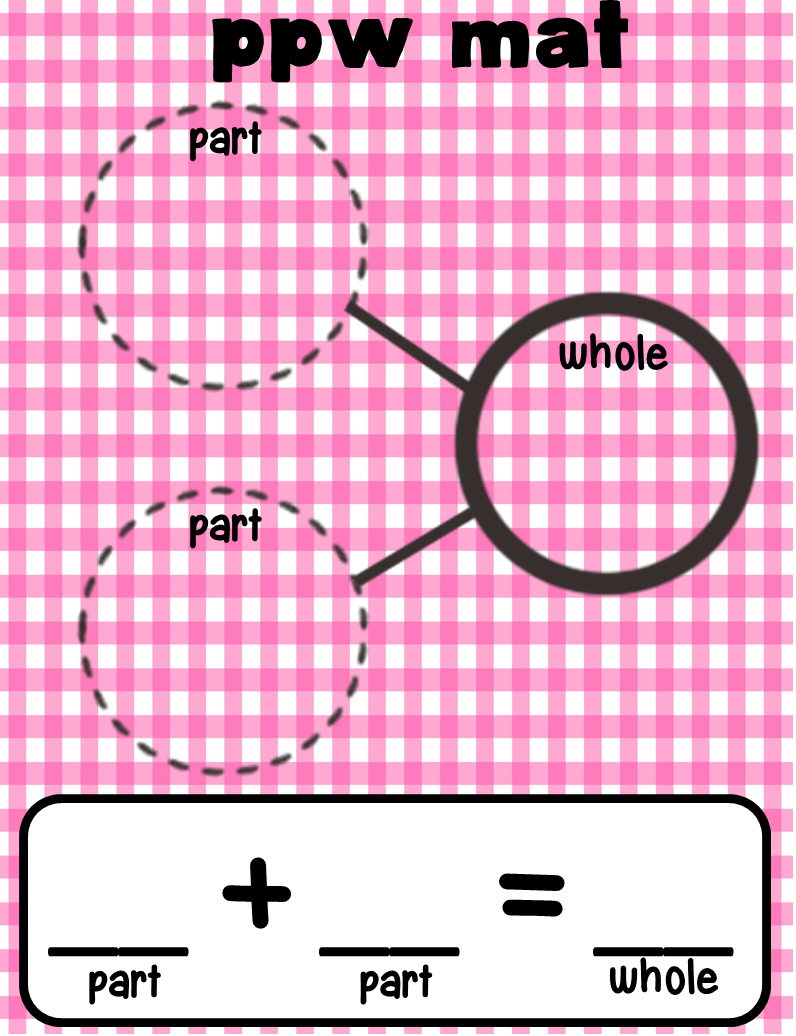
Students need to experience numbers through concrete materials and visual representations before expecting abstract representations. Number bonds help students to explore the part-part-whole relationship of numbers and are an important foundation for understanding how numbers work. A number bond is a picture of the inverse relationship between addition and subtraction. If you know the parts, you can put them together (add) to find the whole. If you know the whole and one of the parts, you take away the part you know (subtract) to find the other part.
I have created three number bond products for Teachers Pay Teachers that I am featuring and they will be on sale from March 2-5. Check them out here.



Tuesday, February 24, 2015
Superhero Owl Behavior Chart
You can find many examples of behavior clip charts on the
internet. When I was teaching, we used
to change the color of students cards. I
also used a ticket system. The behavior
clip chart works well because it’s very easy to manage. All you need to do is create a chart, buy or
get some clothespins, and put a student name on each clothespin. Each day the student’s clothespins usually
start in the middle of the chart where it says Ready to Learn. Students
move up or down the chart, during the day, according to their behavior.
I decided to create this Superhero Owl Behavior Clip Chart
for a couple of my friends who teach first grade. I decided to make my clip chart a little more
positive. In the morning all of your
students would find their clip at the top in the Superheroes section. Take a look below. During the day students can move down or back
up. If you purchase this chart from
Teachers Pay Teachers, you can email me at penny.lund@att.net
and I will be glad to customize the chart with your name or custom
categories. I look forward to hearing
from you! Check out the great clipart and great deals from ReviDevi on Etsy.

Subscribe to:
Posts (Atom)


